
Executive Tools to Bring to College
- TGlearn tammy@tglearn.com
- Jul 29, 2025
- 5 min read
Stepping into college is more than just moving into a dorm and choosing your classes. It’s a major shift toward independence—especially when it comes to managing time, responsibilities, and goals. Executive functioning skills are the brain’s self-management system, and mastering them can be the difference between barely keeping up and thriving. As we have reiterated before, EF skills are the number one indicator of success in college or beyond- above any test or achievement score.
We have been working with students on various campuses across the country and have compiled a list of helpful tools, strategies, etc. Whether you're heading off to college for the first time or supporting someone who is, here are the must-have executive function tools to pack for success:
1. Paper Planner

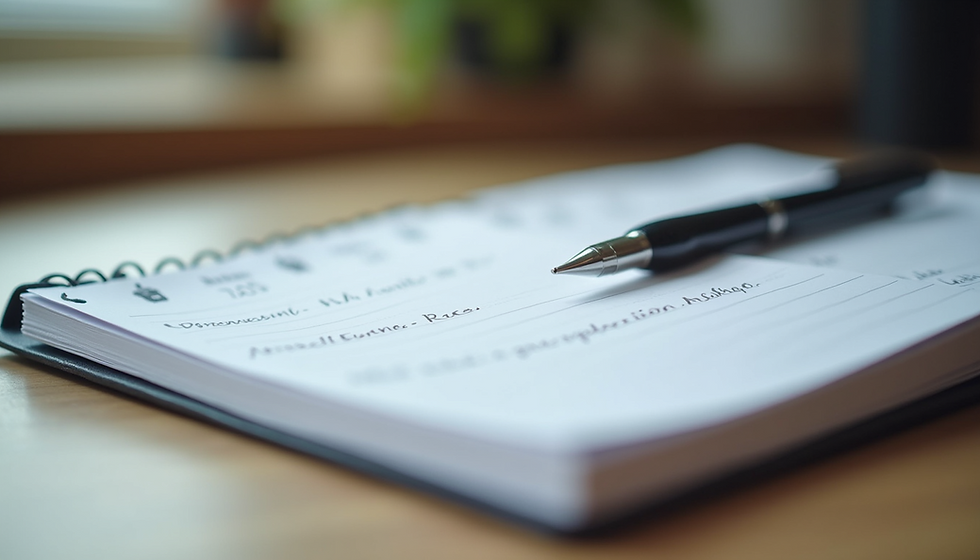
Why it’s essential: A planner is a student's command center. It’s not just for remembering class times—it’s for keeping track of deadlines, due dates, exams, meetings, study blocks, and social events. It should also be used to plan out when how long, when, and where one is going to complete a given task to prioritize effectively. TGlearn’s EF Planner also includes essential EF skill development with goal setting, budgeting, reflections, task initiation and chunking tools, and a month/week/day/hour view.
Pro tip: Use color-coding for different categories (e.g., red for exams, blue for classes, green for personal time, orange for study and homework time)
and set aside time on Sundays to plan out how you will prioritize and manage
your time in the week ahead.
2. Note-Taking App (OneNote, Notability, GoodNotes, or traditional notebooks)
Why it’s essential: Note-taking isn't just about writing things down; it’s about organizing information in a way that supports memory and study. Some apps allow audio recording, keyword search, and tagging.
Pro tip: Try Cornell note-taking or the outline method to boost organization and retention. Writing things down is a more effective way to promote learning and recall than typing.

3. Time Management Helpers (Pomodoro Timer, Forest App, or Time Timer)
Why it’s essential: Staying focused can be hard with so many distractions. Tools like Pomodoro timers encourage structured work/rest cycles to help avoid burnout and boost productivity.
Pro tip: Use a timer for focused study bursts, then take 5-10 minute breaks to recharge.
4. Whiteboard or Wall Calendar
Why it’s essential: A physical visual of your week or month helps with long-term planning and gives a sense of time you don’t get from a phone screen.
Pro tip: Put it somewhere you’ll see every day—like above your desk or near your bed.
5. Cloud Storage & Backup Tools (Google Drive, Dropbox, OneDrive)
Why it’s essential: Losing your laptop mid-semester shouldn't mean losing your work. Cloud storage ensures access to your papers, projects, and notes anywhere, anytime.
Pro tip: Automatically sync files and create folders for each course.
6. Distraction Blockers (Cold Turkey, Freedom, StayFocusd)
Why it’s essential: TikTok, Instagram, YouTube... the distractions are endless. Apps that block certain sites or apps during study times can be a game-changer for focus.
Pro tip: Schedule these blocks during peak study hours or when you’re prone to procrastinate.
7. Email Management Tools (Unroll.Me, Spark, Gmail tabs)
Why it’s essential: Email can quickly become overwhelming. Sorting tools help students prioritize important messages from professors and campus alerts, while filtering out promotional clutter.
Pro tip: Set aside 10 minutes daily to check and respond to emails. Write it into your paper planner.
8. Accountability System (Study groups, accountability buddies, academic coaches)

Why it’s essential: External accountability can reinforce internal discipline. Whether it’s a friend checking in weekly or a study group that meets before each quiz, shared goals make commitment easier.
Pro tip: Schedule regular check-ins at the start of the semester so they become routine. Go ahead and meet with your advisor or student support services to outline some goals and purpose.
9. Secure Place for Personal Info (Password Keeper, Lockbox, or App)
Whether it's digital (like 1Password or LastPass) or physical, students should have a secure way to store:
Passwords
Medical info
Insurance cards
Banking details
10. Understanding of Banking & Budgeting Tools (Mint, YNAB, Excel Sheet)
Knowing how to manage money is crucial. Students should understand:
How to use their bank account/debit card
Track spending
Set a basic budget
Know what to do if their card is lost/stolen
11. Printer & Supplies
Even in the digital age, some professors require printed assignments. A small printer with extra ink and paper can save late-night trips to the library or last-minute printer issues making an assignment late. In addition, it is better to study off paper than through a screen.
12. Envelopes & Stamps
Often forgotten—but handy for mailing paperwork, thank-you notes, birthday cards, or official forms.
13. Pharmacy Access for Medications
Students should know where the nearest pharmacy is and set up refills in advance. Those on regular medication need a plan for consistent access.
14. Counselor or Psychiatrist (if applicable)
If a student receives mental health support, set up continuity of care early. This may include:
Finding a new provider on campus or near campus
Securing telehealth appointments
Transferring prescriptions
15. Refillable Water Bottle
Staying hydrated is an underrated executive function boost. A reusable water bottle helps build this healthy habit.
16. Noise-Canceling Headphones
Great for studying in shared spaces or tuning out distractions during deep focus sessions.

17. Basic First Aid Kit & OTC Medications
Include:
Band-aids
Pain relievers
Cold medicine
Thermometer
Allergy meds
Antacid
Being prepared saves last-minute trips when students are sick or injured.
18. AirTag or Bluetooth Tracker (for Keys, ID, Wallet)
Perfect for students who misplace things often. These tiny trackers can be life-savers for locating essentials in a rush.
19. Alarm Clock That’s Hard to Turn Off
Relying on a phone alarm can lead to snoozing or scrolling. A separate, annoying alarm clock encourages better wake-up habits.
20. Umbrella & Rain Gear
Weather surprises shouldn’t derail attendance or routines. Pack a reliable umbrella and lightweight rain jacket.
21. Stock up on some non-perishable healthy on the go snacks and multi-vitamins.
In college, meal times can revolve around class times. Be prepared to be on the go with some healthy non-perishable snacks such as protein bars, trail mix, etc. If you are a coffee drinker, get a small coffee maker like a Ninja that can brew you a quick cup that you can take on the go instead of spending $8 every day for one from the student center. It can also be hard to find good fruits and veggies- so go ahead and get a multi-vitamin to make sure you are getting essential vitamins and minerals.
Pro tip: some brands such as Ritual will mail a monthly supply of vitamins right to your mailbox.
22. Back-Up Glasses or Contacts (if applicable)
It’s always good to have a spare pair, especially if glasses break or contacts get lost during finals week.
Final Thoughts
Executive functioning isn’t just something you “have” or “don’t have.” It’s a skill set—and like any skill, it improves with practice and the right tools. By intentionally building a system that supports time management, organization, and self-regulation, college students can set themselves up for both academic and personal success.
So before you stock up on dorm snacks and twin XL sheets, make sure you’re also packing your executive function toolkit. Your future self will thank you!


Comments