
Traumatic Brain Injury & Education: Tips for Teachers
- TGlearn tammy@tglearn.com

- Feb 12, 2022
- 3 min read
Despite being considered a leading cause of death and disability among children and young adults in the United States, traumatic brain injury (TBI) is considered a low incidence disability in schools across America.
Why? The reasons behind this discrepancy are as complex as brain injuries themselves. However, one factor contributing to the poor identification of students with traumatic brain injuries is the lack of public and professional knowledge around the impact and management of TBIs.

How do TBIs affect young learners?
In general, research shows that a traumatic brain injury most profoundly affects future learning and skills that are currently developing at the time of injury. Inversely, skills that are well established at the time of injury are typically more resilient.
With this in mind, children and adolescents who have suffered a brain injury often face unique challenges when compared to their adult counterparts because many foundational life skills (such as reading, writing, talking, etc.) are still developing or are yet to develop.
For example, consider the effect of an injury on the reading skills in an adult versus a child. An adult typically has well-established reading abilities and years of honing this essential skill, while a child might only just be learning to read simple words at the time of injury.
Furthermore, children who have suffered a traumatic brain injury often follow a complex, less predictable recovery trajectory. In some cases, a child may appear to have “recovered” from their injury (and be compensating adequately). Still, certain skill deficits may not become apparent until the child reaches the developmental age where those skills become necessary.
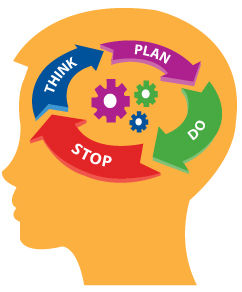
Think about a child who sustained a frontal lobe injury as a toddler. The frontal lobe of the brain is primarily responsible for a child’s executive function—skills such as paying attention, organizing, planning, regulating emotions, and self-monitoring. While this area of the brain is still developing in early childhood, it is developmentally appropriate for a teacher to provide heavy support and scaffolding of these emerging skills. However, as the child progresses through school, academic independence becomes essential and deficits resulting from an injury to the frontal lobe may suddenly become apparent.
Due to the highly complex nature of childhood traumatic brain injury, we’ve compiled a few starting tips for teachers who want to learn more!
Three Tips for Teachers:
Educate yourself on traumatic brain injury in childhood and adolescence. Unfortunately, many teachers receive little undergrad preparation regarding the classroom management of TBIs. The good news? There is a wealth of resources available online! Start with Brainline’s library of resources for educators—you’ll find articles and videos on a wide array of topics. Request professional development opportunities at your school on this topic—many state-focused nonprofit organizations, like the Tennessee Disability Coalition’s BrainLinks Program, provide professional development opportunities, webinars, and resources at no cost.
Ask the right questions. If you notice that a child or adolescent is struggling to learn, investigate all the possibilities. Ask parents if a child has sustained any previous head injuries that you should know about, even if the event occurred many years prior. Due to siloed care systems (i.e, medicine, rehabilitation, and education), documentation of head injuries often gets “lost in the shuffle.” Be sure to ask this important question as you assess the source of a child’s learning difficulties.
Understand the student’s pre-injury level of functioning. If a student in your class sustains a brain injury, consider their pre-injury strengths and weaknesses as you plan to support them in the classroom. Suppose a student previously learned best by listening, but was injured in the temporal lobe (the part of the brain primarily responsible for auditory processing). They may now need visual supports to understand verbal lectures or directions best. Or, consider a child who struggled with anxiety pre-injury. In many cases, brain injury exacerbates previous mental health issues, and this student may need extra support managing their anxiety post-injury.
And finally, remember that every student and every brain injury is unique. Experts in the field often say, “When you’ve seen one brain injury, you’ve seen one brain injury.” Although we can speculate as to how an injury might manifest due to factors such as injury location, mechanism, age, and pre-morbid functioning—never pigeonhole a student’s recovery and learning potential post-injury! Every student is capable of learning, especially when provided with the right strategies to support their unique learning profile.
By: Courtney Price, TGLearn Intern



Comments